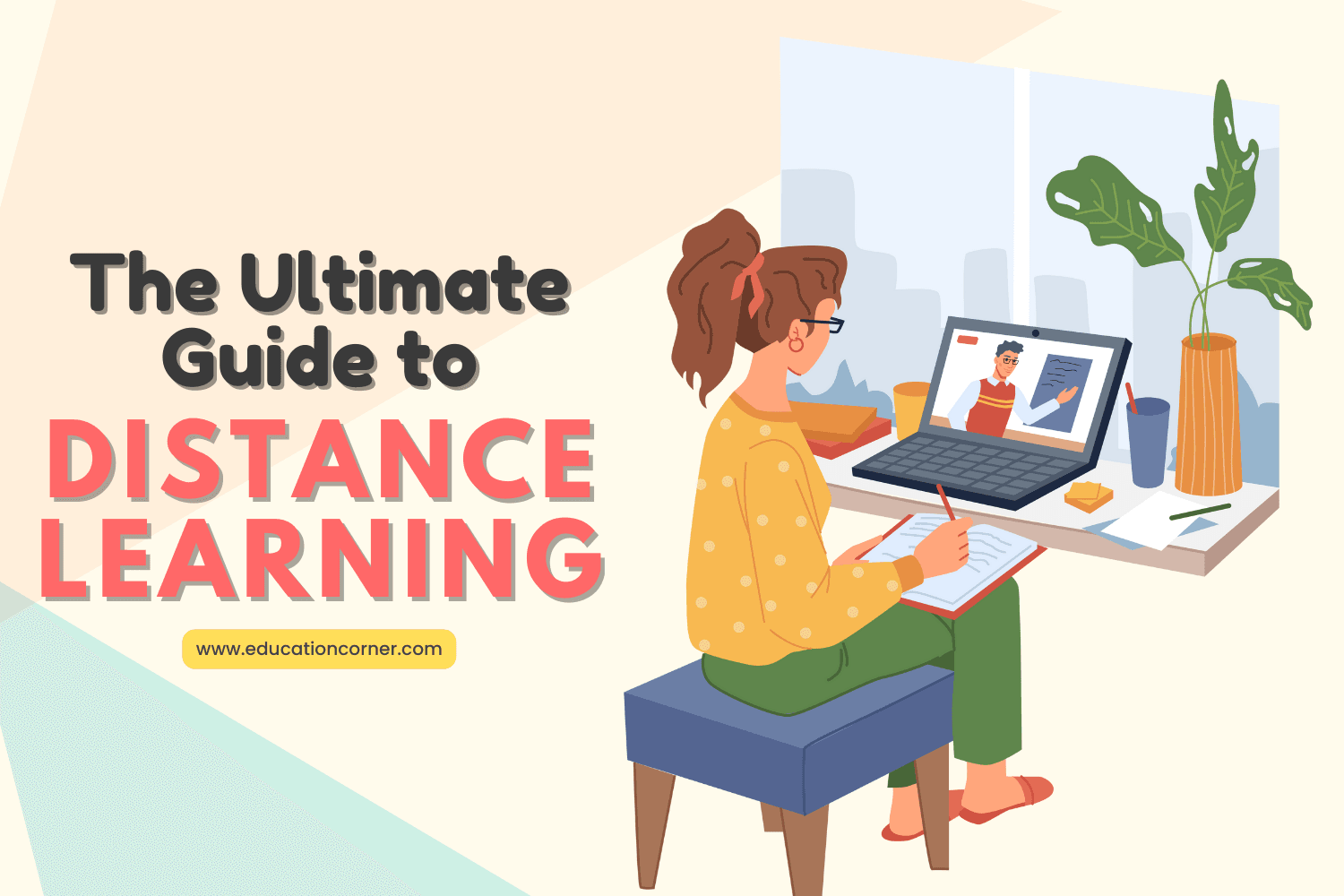

“Earn a college degree in your pajamas!” “Get your bachelor’s without leaving the house!” “Study wherever and however you want!”
Higher ed has been marketing online courses and degree programs like this for years now. Online programs are more flexible than the traditional residential university experience. But catchphrases like these cause students to think online study is easy and convenient, too. While the flexibility is real, know that college isn’t supposed to be easy, and it’s rarely convenient.
It’s important to begin the process of choosing a program with your eyes wide open. Don’t believe the marketing spin that this is going to be a cakewalk. Earning a degree is going to take serious effort and long-term commitment.
It’s also important to understand that not all programs are created equal. In fact, no two programs are exactly the same. There are wide variances in quality, format, cost, success rates, and more.
What is Distance Learning?
Distance learning is an educational process where students receive instruction through online classes, video recordings, video conferencing, or any other audio/visual technology medium. It enables people to receive education without having to be physically present in a classroom.
Properly designed distance learning programs can be a very convenient and effective way to acquire more education. This may seem difficult without students and teachers interacting in a classroom, but people enrolled in distance learning programs can learn just as much away from a classroom as in one.
Distance learning and education are interchangeable terms. Distance learning is not a recent phenomenon. The origins of distance learning can be traced back to the advent of the modern postal system and the mass production of printed publications, which made it possible to spread information rapidly throughout the world.
Why Distance Learning?
Distance learning has made education more accessible to larger groups of people. It is a convenient way to obtain work experience while completing college or other vocational training. Many organizations, such as the military, large corporations, and government agencies rely on distance education to train service members and employees. Education has also changed as communication technology has revolutionized society.
In most cases, education or specialized training is a requirement for most high paid jobs. The availability of the Internet has increased the number of online courses. These courses are offered at online colleges, such as Argosy University, University of Phoenix, Capella University, and Kaplan University.
Who Uses Distance Learning?
More students today are taking advantage of distance learning programs. Working professionals, high school students, and even traditional college students enroll in distance learning classes. Companies and other organizations frequently utilize distance learning programs to train employees. The following are some of the reasons people enroll in distance learning programs:
- Students living in rural areas or those unable to attend traditional classes utilize distance learning
- Students from all over the world can enroll in online courses offered at specific colleges
- Companies utilize distance learning programs to train employees, especially those working in distance regions
Distance learning is very flexible.
Although distance learning can fit into anyone’s schedule, students must take the initiative to study and complete their course work. Distance learning programs are not easy or automatic, so lazy students will probably not successfully complete courses they enroll in. However, even students that are busy or have numerous responsibilities should find the time to study because of the flexibility of these programs.
What technology is used for online distance learning?
Many different types of technology are utilized to enhance online learning. Special computer programs, high speed Internet, and webcam broadcasting technology are just a few of the modern technologies utilized in distance learning. As a result, learning opportunities that never existed for people living in distance or rural areas can obtain a college education or specialized job training. It’s not uncommon for a student living in a rural region of South Dakota to complete a course offered by a college in California.
Students often interact with teachers using video conferencing, satellite, and Internet technology. They can also communicate with other students enrolled in the same course using modern telecommunications technology.
Since students can complete courses wherever the Internet is accessible, many often take time during a work break or while staying in a hotel during a business trip to complete their school work. The flexibility of distance learning is one of the main appeals of these programs.
What is the experience like for online distance learners?
Since distance learning is slowly becoming a popular way to complete college or job training, many people still have reservations about it. The details provided below will give those considering distance learning an idea of what it’s like:
- Students usually interact with classmates and teachers in chat rooms and other instant messaging services. This makes it possible to ask questions and share comments without sitting in a classroom. Teacher lectures are frequently broadcast online, and many students and teachers stay in touch via conference calling technology.
- Group work is completed in chat rooms and special rooms on websites. Students also use e-mail, instant messaging, and web broadcasting technology to discuss project ideas with classmates.
- Course assignments completed by students are completed on a website or submitted as email attachments. Students are usually not permitted to submit work completed on websites after due dates.
- Most reference materials, such as documents and books, are accessible online for students. As a result, students usually do not have to visit libraries to complete traditional research. Many of the books students need are scanned and placed online.
- Questions for instructors can be asked over the phone, through an e-mail, or in a chat room. Instant messaging technology is becoming a very popular way for students and teachers to interact.
Working professionals, stay at home moms, and other people unable to attend college on a campus are utilizing distance learning programs to acquire more education or job training.
Choosing a Distance Learning School
Distance learning has existed for centuries through traditional mail and other creative means, but online education is still a relatively new field. Even though the technology is different, the educational mission and academic standards are the same as in traditional education: providing a quality education. Many online schools do exactly that, while others are merely degree mills or outright frauds. And of course, there’s plenty of variety in the middle.
As you search for online schools, it’s important to know what you’re looking for, and what to look out for. Below are some parameters to help you choose the best online school for you.
Accreditation
Accreditation is the first and most important aspect of any school. Make sure a proper association-preferably a regional association-has accredited the school you’re investigating. This will ensure that it is meeting academic requirements and that other institutions will accept the credits you earn. Attending a school that isn’t properly accredited will not only cause you headaches in college, but with future employers as well.
You also want to check that the accrediting agency is legit. Some of them don’t review schools very thoroughly and some will approve almost anyone for a fee. Your best bet is to verify that the accrediting association is endorsed by the U.S. Department of Education.
Quality of Faculty
By its nature, distance education is more independent than attending a physical classroom with other students, but having good teachers is still vital. Go online and research the faculty of any school you’re looking at. How much education and experience do the teachers have?
Just because a school delivers classes online doesn’t mean the teachers should be any less qualified. Most community college teachers have at least a Masters degree in their field. University professors typically have PhD’s. Any good online school should have comparable faculty.
Degree Programs
As with any school, you need to research the academic programs at an online school and make sure they line up with your goals for higher education. These days, there are many options to choose from in distance education, so shop around and compare specific programs at different schools.
Does this school offer Associates degrees or professional certification? If so, are they recognized by other institutions of higher education? This is vital, especially if you plan on continuing on to a four-year university.
Look at the specific courses that are required for a degree. Do they look interesting, challenging, or make sense with the field of study? Are these classes that you would be attracted to? How do they compare to the course requirements at other online schools?
Understand the Requirements and Schedule
It is also wise to understand the academic requirements and the class schedule before you commit to an online program. In distance education, these factors can vary widely from program to program. Some courses allow you to work at your own pace while others have deadlines, a schedule of live virtual classes, or in-person testing administered by the instructor or a proctor.
Ask yourself a few questions about you as a student. Are you good at self-motivation and staying on task, or do you need structure and/or deadlines? Are you an auditory learner, meaning you can remember details better if you hear them, or a visual learner who can easily read and absorb information? Some online courses are filled with live or recorded video lectures, podcasts and multimedia lessons, while others rely mainly on written text.
Some online programs are hybrid and require some physical attendance, either for lectures or exams. Understand the schedule so you can be certain you can meet these requirements. Also make sure the school is not too far away from where you live.
Cost
How much is tuition and are there any hidden fees or extra costs? Distance education is a dynamic and competitive market, and cost and quality don’t always match up. If you’ve begun your search with one school in particular, expand it by looking at other schools with comparable tuition. Compare the quality and variety of degrees, experience of the teachers and feedback from former and current students.
Online college should typically cost a little less than attending a traditional college or university. If you’re looking at a particular online school, do a cost comparison with other colleges in your area.
Student Enrollment, Class Size and Office Hours
How many students does this school enroll? In general, more is better. If an established school isn’t attracting that many students, it’s probably not a good sign. The same goes for how long the school has been in business. The longer, the better. You still want to investigate the quality of their programs and faculty, but experience is usually a good sign.
Look beyond the enrollment numbers. What is the graduation rate? You want to attend a school that has a good record of students’ academic success. What is the student/teacher ratio and average class size? The class is online, but to succeed you will still need some individual attention from the instructor.
That should extend beyond the classroom. It’s often overlooked in online education, but students still require extra interaction with instructors, as well as access to tutoring and mentorship opportunities. Many long-distance teachers will keep online “office hours,” allowing students the same access to instructors as in traditional classes.
If possible, talk to some current or former students to get an idea of the availability of these important aspects of school.
Hardware, Software and Textbooks
Most online schools have basic requirements when it comes to computers. You won’t need a supercomputer, just something that is relatively up-to-date and able to handle word processing and typical online activity. In the case of some specialized courses, you’ll need expensive hardware, but not for most classes.
Software will usually be provided free of charge. In some cases you will need to buy software for the class, which can vary widely in price. The same goes for textbooks. Make sure you know the cost estimate for software and textbooks. They can add up fast.
Criteria
Remember, distance education has a different delivery method than traditional education, but the goal remains the same. So do the academic standards. Use the same criteria you would for a physical college, just in a different context. If an online school is right for you, it should stand up to the test.
Choosing a Distance Learning Program
Since more students are enrolling in distance learning programs, those considering enrolling in one should be cautious when selecting a program. Not all programs offer high quality education. Many institutions are cashing in on this demand for distance learning by offering programs that are sub-par or non-accredited. Therefore, those looking for a distance learning program should conduct thorough research before selecting one.
Formats Vary Widely…and So Do Costs
For starters, we’re using the term “online course” to mean a college course offered for credit that can be taken completely online. But within that narrow definition exist many different types of courses. Some are little more than correspondence courses: pre-recorded videos with minimal personal involvement from the professor. Some (like Ohio State’s online bachelors program) are videos recorded live and archived for later viewing. Others go far beyond video, offering richly interactive learning materials and robust professor interactions.
Costs also vary considerably. Many of the high-quality online programs are offered through traditional universities, where the online courses are just as expensive as their on-campus counterparts. Devon Haynie at US News found that most online courses from traditional 4-year programs cost $300-400 per credit hour, plus additional fees. She signed up for a personal finance course that cost $1300 total. There were discounts to be had for in-state tuition, and she found a community college option for $515.
Of course, a quick Google search reveals many low- and no-cost options. But beware: many of these are from unaccredited schools or can’t be taken for college credit. As a rule of thumb, if something is worth $1300 from a well-known school, you should view with suspicion the $25 version from a school you’ve never heard of.
Bottom line: expect to pay a decent amount for decent quality online education, and understand that courses will vary in format and quality.
Know What You’re Paying For
Along the same lines, it’s important to know what you’re paying for before you buy. If you’re enrolling in an entirely online program, this comes into play before you enroll. Do your research. US News offers an independent ranking of entirely online programs, with in-depth reviews of the top programs.
If on the other hand you’re enrolling in a few courses here and there (perhaps to finish out a degree you’ve already started), you need to do your research for each course. Say you paid $1000 for a robust, high-quality course and were happy with your investment. Will you be happy to drop another $1000 on a lesser quality course? Make sure you know what you’re getting before you buy.
Know What’s Expected of You
Online courses are marketed to busy professionals and adults trying to complete degrees. Marketers emphasize the freedom and convenience, but these courses are still a ton of work. Before you enroll in and pay for a course, find out what kind of time commitment you’re making. Many college courses, online or not, require 15 hours or more per week. Some have huge projects that spike the needed time drastically upward one or two weeks of the semester.
Bottom line: take the time to find out what will be expected of you, then evaluate whether you are able to give that kind of time—before you buy.
Have a Plan
If your ultimate goal is a degree, then taking an online class here or there because the content sounds interesting or useful isn’t a real plan. Instead, you need to create a plan that leads to your goal.
You may be part-way through a residential degree program, looking to fill some course gaps. You may be working on getting an academic head start by knocking out some early courses online before heading to a residential program. Or you may be looking for a degree that can be earned entirely online. Whatever your approach, be sure to formulate a plan that leads to a degree before enrolling in an online course.
The good news is you shouldn’t need to go it alone. You should have access to a faculty advisor or coach who can help you craft this plan. If your prospective online college can’t offer you this kind of guidance, consider that a red flag.
Understand Some Potential Downsides
Online programs can leave students feeling a bit isolated. Face-to-face (two-way) video interaction with instructors is rare to nonexistent, and collaboration with classmates is often limited to chat and email. The collaboration and camaraderie residential students enjoy just isn’t there. Look for programs that work hard to overcome this, but understand that it’s an issue even in the best programs.
Online programs have a lower graduation rate than residential or blended (part residential, part online) programs, notes James Paterson at EducationDive. Experts disagree on the reasons why, but it may have to do with the greater level of self-motivation and direction that’s needed to succeed while feeling all on your own.
To offset these downsides, look for quality online programs with robust student services and student support. The old adage “you get what you pay for” is generally true here: the cheapest courses have the lowest levels of student support.
Know Your Way Around a Computer
You don’t have to be a technology expert to make online college work, but you do need to be conversant. Every school has its own learning management system, or LMS. You may need to troubleshoot why video isn’t playing (do you have the necessary software/codec/browser?). Courses will have their own platforms and systems and even sometimes specialized software. And of course, nothing works without a stable internet connection.
Bottom line: if the lingo in the previous paragraph scares you, you may need to brush up on your computer skills before diving into online education.
Realize That Convenient Doesn’t Mean Easy
Online classes and degree programs offer a measure of convenience that a traditional residential program can’t match. The ability to watch lectures from anywhere and on your own timetable is indispensable for some. But don’t make the mistake of thinking that an online program will be easier than an in-person one. Quality online programs are just as rigorous as their brick-and-mortar counterparts.
In fact, some students may find online programs more difficult than residential programs. The content is the same, but online programs lack some of the accountability and presence of traditional programs. In a traditional program, students have to show up at a set time 2 or 3 times a week. And when they do miss class, those students have to face the teacher’s disapproving gaze the next class period. It’s much easier to fall behind when you’re left to set your own schedule. And it’s easier to let things slide when you don’t feel the in-person pressure from the professor.
Ensure Your Credits Will Transfer Before Enrolling
If you have any college credit to your name already, be sure your existing college credit and your prospective online education will play nice. The goal is to graduate from one school or the other, but not every school accepts credits from every other school. And some schools may accept some credits but not others from another school. Whether you intend to earn your degree from the online or the traditional university, be certain that all your needed credits will transfer. Do this before enrolling online.
MOOCs Are No Substitute for Traditional Online Courses
Massive Open Online Courses (MOOCs) are trendy. You can learn from professors at elite universities, for free! And as a general enrichment tool, they are pretty cool. But make no mistake: MOOCs are no substitute for more conventional (and less free) online courses. They have a low completion rate and usually have little accountability or assessment. The vast majority of MOOCs don’t offer college credits, either. Class Central reports on a few ways to take MOOCs for credit, but the primary way of doing so turns the free course into a $649 course. With that kind of price tag, why not go the conventional route and benefit from interaction with your professor?
Bottom line: take these for fun or for general enrichment. But if you’re looking to earn a degree, these almost certainly aren’t the right choice for you.
Look for Accreditation
Schools offering online degree programs can be accredited just like traditional colleges and universities. Accreditation is a kind of seal of approval granted by an independent accrediting organization. These organizations evaluate a school’s quality and verify whether the school complies with education law.
Some employers and many graduate schools require an accredited degree for either hire or admission. Don’t shortchange yourself by spending time and effort to earn a degree from an unaccredited school. It’s not worth the risk.
Student Success
You want your diploma to be the key to future opportunities, not just a piece of paper. Other than accreditation, how can you better know what your degree can accomplish for you?
Start by looking at student success. Quality programs will advertise their student successes. They may advertise high boards passing percentages in a nursing program, above-average med school acceptance rates, or a percentage of prospective graduates hired before graduation. These statistics don’t guarantee you your dream job, of course, but they do suggest which programs and schools are high in quality.
Conversely, investigate graduation/completion rates and rate of student loan defaults. Low graduation rates and high default rates suggest a program is not serving its students well. According to a Chicago Tribune story by Maria Danilova, for-profit colleges are the worst offenders by both these metrics.
Graduation rates are easily obtainable, and the higher, the better. Remember, though, that online program graduation rates overall will be lower than residential programs. The rate of student loan defaults can be trickier to track down, as schools aren’t required to divulge this. But this is the internet: if a school gets a bad reputation in this area, it won’t be too hard to find out.
What Makes a Good Online Course?
Not all online classes are created equal. Unfortunately, there’s a whole heap of shoddily produced, bore-you-to-tears classes out there that, in the end, just don’t provide quality education. On the other hand, there are some truly inspired, engaging, and educational classes that really live up to the potential of distance learning. Here are a few key factors that make all the difference to the quality of online courses:
1. Proper Pacing
It’s a fine balance to strike, but the best online courses are the ones which are properly paced. Proper pacing means the student is neither bored nor overwhelmed; they have plenty of time–and notice–to complete large projects, but also are kept engaged by small assignments in the interim. These small assignments should never stack up and bury the student in stress and anxiety, nor should they be pointless, tedious busy work.
2. Multimedia Integration
The really exciting part of online classes is the fact that they can present content in ways that books and lectures can’t. Great online courses take advantage of this fact, and incorporate various multimedia elements into the presentation, such as videos, podcasts, interactive activities, and more. This is certainly more engaging than reading a long text document, and the information is much more likely to be retained. It’s not enough, however, to simply add in multimedia for multimedia’s sake. The content must be done well, and with a clear purpose. A forty-minute video of the professor mumbling into his webcam does not qualify as good use of multimedia.
3. Quality Content
When a course’s content is of high quality, you find yourself engaged and curious, and as a result you learn much more naturally. This is in stark contrast to those courses which only use dismal, bland textbooks and regurgitative, fill-in-the-blank quizzes. Low quality content feels like a chore, and the information is seldom retained. High quality content can be of any modality: videos, websites, audio presentations, etc. What’s important is this: does it lend itself to natural learning? Would an expert in the field recommend it to anyone curious about the subject, regardless of the online class? This is the sort of content used by the best online courses.
4. Self-Directed Learning
The best online classes recognize that their students are adults who have the ability to make up their own mind and take responsibility for their own education. When the course is too micromanaged, when the assignments are dictated to the smallest detail, students become frustrated or, at best, don’t make any meaningful discoveries on their own. Good online courses give students the freedom to design their own projects and explore the aspects of the subject which are most interesting to them.
5. Community Connection
One of the biggest risks that online courses face is a sense of student isolation. Great online courses combat this risk by encouraging online interaction between students and faculty. For example, a class may have an off-topic discussion board, where students can feel free to chat about anything that interests them–the playoffs, for example, or a tasty new recipe. Or a class may require students to work on a group project together via an online forum. This fosters a sense of community, and gives students the support needed to ask questions or seek guidance.
6. Multiple Learning Modalities
Everyone learns differently. Some students are very visually oriented; others need to hear information out loud to retain it. The best online courses integrate as many learning modalities as possible–visual, auditory, kinesthetic, musical, and so on–into the presentation. This way, students are able to study in the way that works best for them.
7. Intuitive Navigation
The layout of the course should be clear and easy to follow. Students should always know what to do next, and should always know how to access relevant information and resources. The best courses have been reviewed by third party organizations and are designed to be intuitive to navigate.
8. Reliable Technology
Many courses, in an attempt to be flashy or stylish, utilize a host of technologies in their presentation, often requiring students to download a dozen new plug-ins or sign up for outside services. The problem with this is that it doesn’t always work, and everyone wastes a boatload of time and energy troubleshooting. The best courses use only technologies which are as reliable and as universally supported as possible. This makes the online learning experience much more pleasant for everyone involved.
9. Room for Additional Exploration
Great online courses provide curious students with resources which provide additional information and a greater depth of detail. It’s another fine balance: having too many supplemental add-ons can be confusing or stressful, but it’s important to give students an opportunity to learn more if they wish to do so. The key is to clearly differentiate the core class requirements from the additional resources, so students know exactly what’s expected of them, and what options are available.
10. Creative Design
It’s a hard quality to define, but the best courses are designed to give students a varied and fresh learning experience week after week. All too often, online courses fall into a formula, and repeat that formula over and over for the entire duration of the class. This will be a very dull experience for the students, and the actual educational value of the course will suffer as well. The best courses are designed by people who put careful thought and focused effort towards creating a unique and engaging class experience, from start to finish.